
Industrial Epoxy Flooring
in Marshalltown, IA
A floor system chosen for the workload your plant’s slab genuinely carries: parked and rolling weight, whatever drips or splashes onto it, and the cleaning routines and chemicals that are part of an ordinary shift.
Your Floor Takes the Abuse. Your Operation Shouldn't
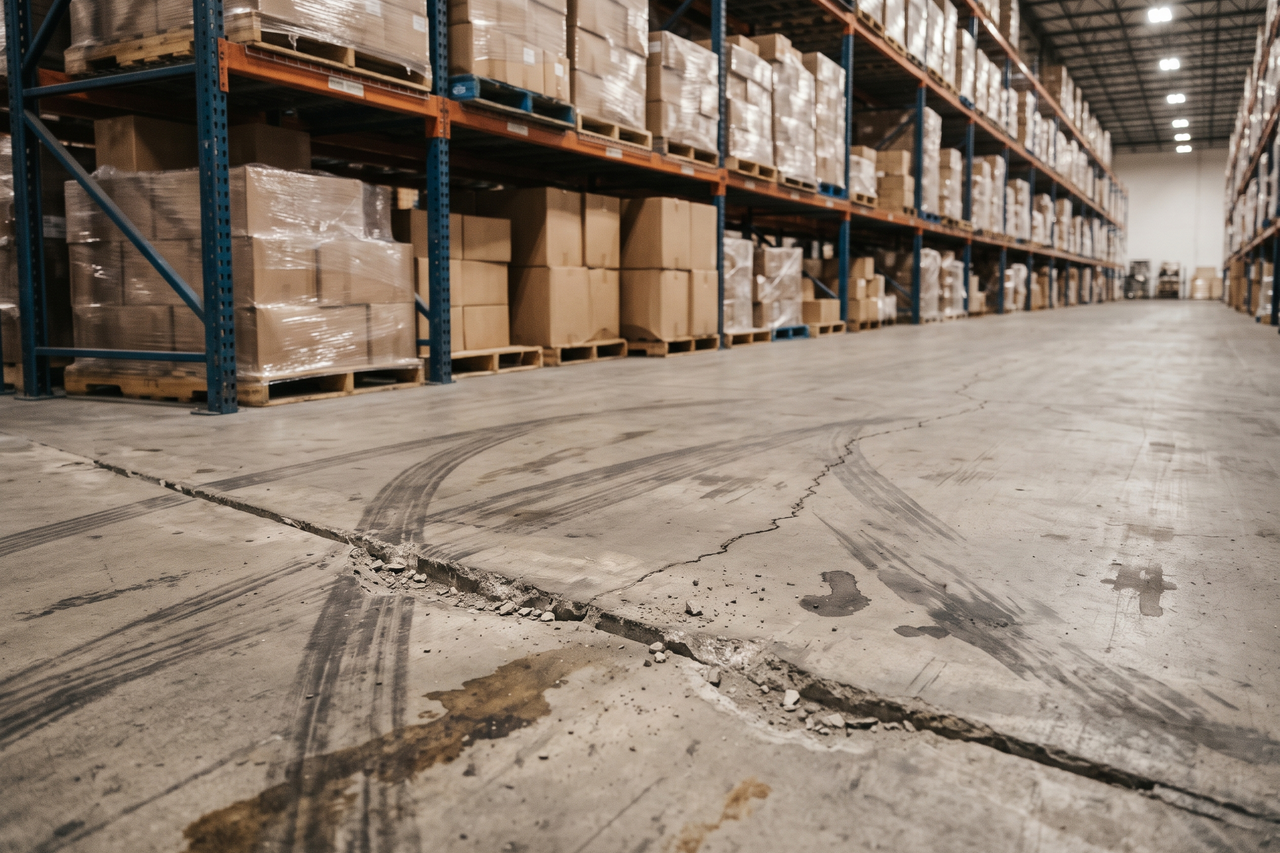
Few slabs get treated as roughly as a production floor. Lift trucks and pallet jacks trace the very same routes every shift, scouring identical stripes of concrete over and over. Presses and other heavy machines bear down on their footprint without letup. Cutting fluid, hydraulic oil and process liquids that escape a line work their way into any uncoated concrete in their path.
Raw concrete in a brand-new building can pass for fine. Run enough wheels across it, though, and the wear starts showing up. Rubber and steel loosen the top layer and turn it into fine grit that ends up on shelving, finished goods and machinery. Concrete beneath the biggest equipment and along the busiest routes gives out first, and the worn patches keep widening as production goes on. Wherever chemicals hit the floor repeatedly, dark blotches form that a mop and a scrubber can no longer budge.
At some point the floor itself starts slowing the work down. Drivers steer around ruts and dips no one designed into the layout. Janitorial staff push harder for a dingier result as the concrete keeps crumbling open. Employees and visiting customers both take the floor as a hint of how much care goes into the rest of the business.
Your Facility Determines the Right Flooring System
The gap between one industrial coating and the next is wider than many plant owners realize. Build thickness, load tolerance, abrasion performance, chemical resistance and surface texture all shift from one system to the next. Something that thrives on one plant floor can be a mistake on another, and getting it right takes more than eyeballing the concrete during a walkthrough.
As the flooring professional reviews an industrial slab, the questions reach well beyond the surface: what rolls and sits on it, which chemicals splash down and in what concentration, how the floor gets cleaned and on what rotation, whether hot or cold swings reach the concrete, and whether striping, safety zones or a gritted finish should be written into the plan.
Cold storage and a hectic welding and fabrication bay put opposite kinds of stress on concrete. Vapor pushing up from underneath, temperature cycling, radiant heat from machinery and the exact chemicals involved all set the bar the coating has to clear. Skip the on-site study of those conditions and pairing a system to the floor becomes a guess.
Built Around Your Facility. Not the Other Way Around
Getting an industrial specification right begins with understanding the daily rhythm of the facility, long before anyone names a product or sketches out the work.
01
Evaluate the Facility
A plant walkthrough records the slab’s current state, marks where forklifts and machines stress the concrete most, logs wear and prior damage, and sizes up the prep required.
02
Build the Right Flooring Plan
Drawing on that walkthrough, your installer proposes a system that suits the plant’s day-to-day demands, sets the preparation scope, lists the concrete repairs involved and reviews the whole proposal with you ahead of any work.
03
Put Your Floor to Work
Coating goes down according to a sequence the facility signs off on beforehand. Scheduling, phasing and the approach to the job all depend on the project and the contractor.
Need a Floor Built for a Tougher Environment?
To request an industrial flooring estimate, explain what your plant floor endures on a normal shift and what you want the project to fix. Snapshots of cracked, stained or worn zones are welcome too.
Floor Failure Creates Problems Beyond the Floor
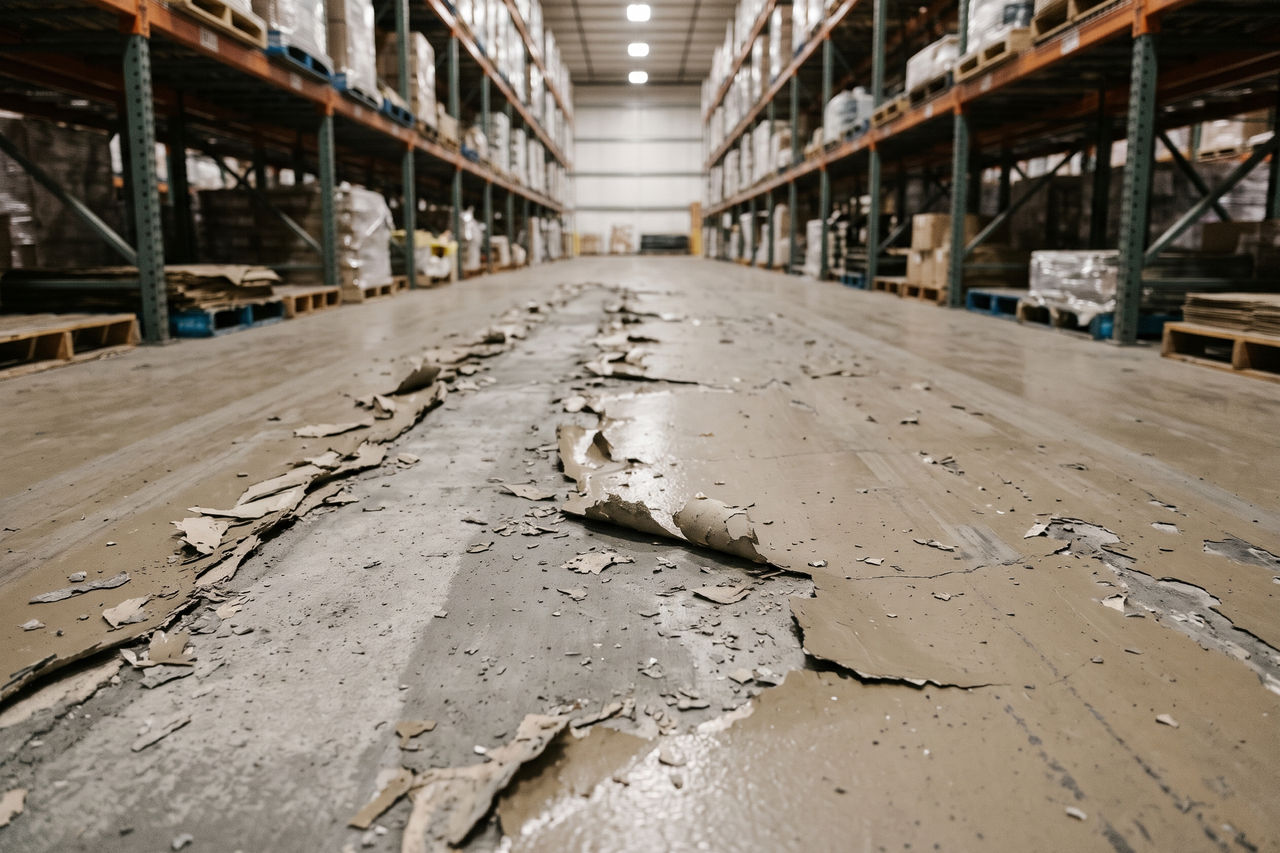
When a coating starts pulling off the concrete, the damage hardly ever stays contained. Loose chips skitter into traffic lanes and gather around machines, and suddenly maintenance has a production headache on its hands. Stretches of floor that used to be an afterthought become obstacles the whole plant has to plan around.
Concrete left naked after a coating gives way is far more stubborn to rescue than a slab that started out healthy. Prolonged production traffic drives oil and residue deep into the pores, and keeping ahead of the damage gets tougher as the bare patch grows.
Digging out from a failed industrial floor tends to be more disruptive than plant managers expect. The zone has to be cleared and closed off, the failing material taken down to sound concrete and the slab reprepared so a properly specified system has a fair chance this time. That second round frequently runs past what a carefully planned original job would have cost.
A Floor That Keeps Up With Your Operation
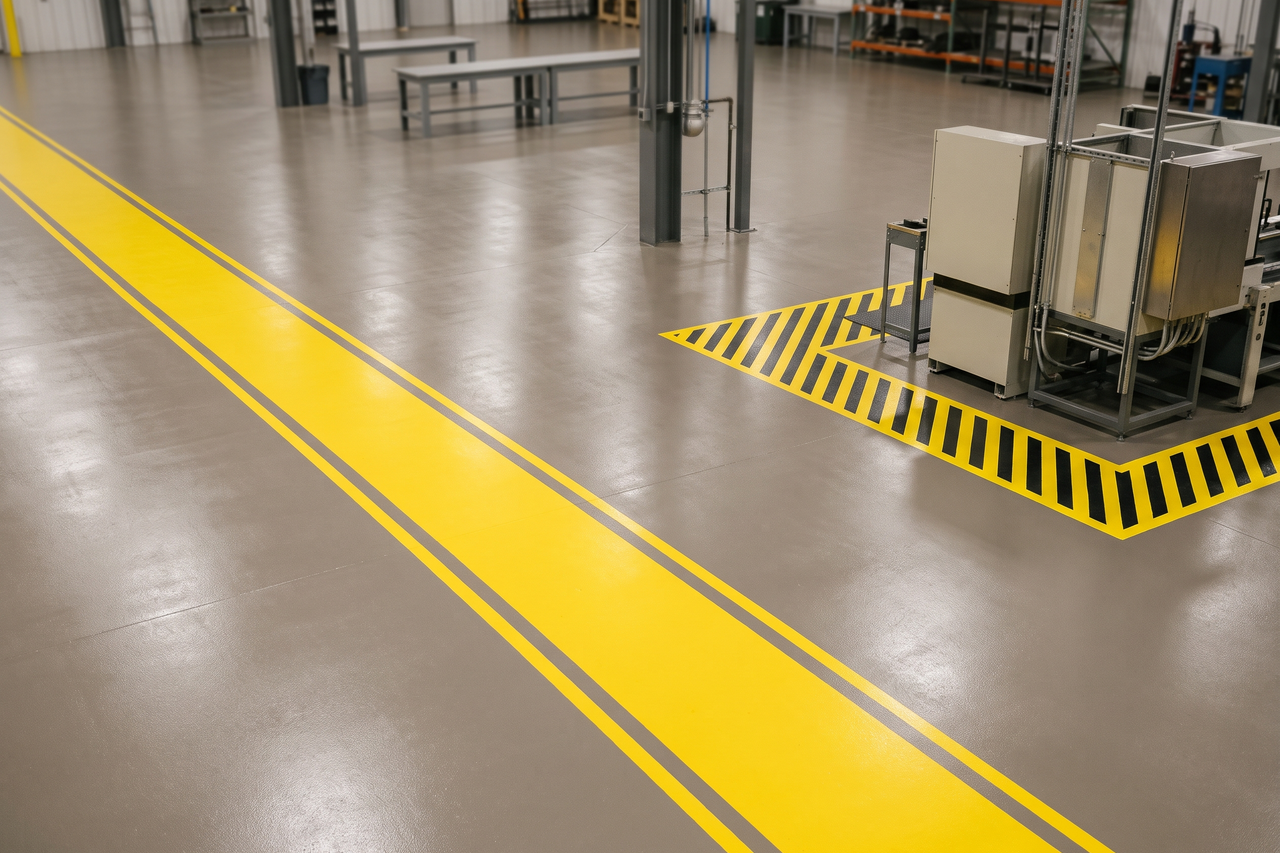
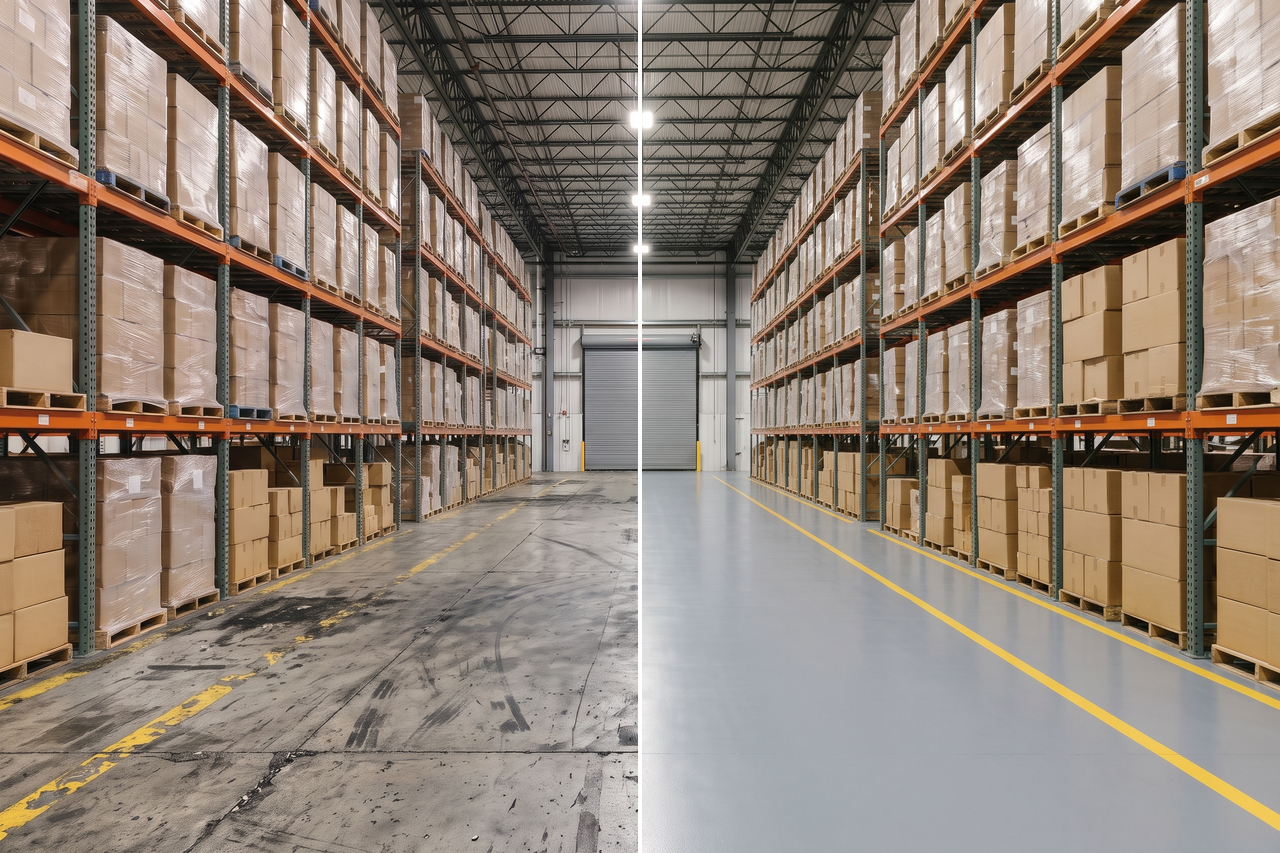
Coating the slab with a system suited to the plant’s workload changes how upkeep goes. Forklift traffic, washdowns and chemical drips meet a surface picked to handle them, rather than porous concrete that drinks in every spill. Each cleaning pass accomplishes more once the floor stops shedding grit of its own.
Coated concrete throws off far less dust than an untreated slab, a genuine plus in places where clean air and well-kept machinery count. The glossier surface reflects much more of the light from overhead fixtures too, so aisles and work cells look noticeably brighter with no new lamps installed.
Walkway lanes, hazard zones, directional arrows and gritty anti-slip textures can be worked into the specification, depending on what the selected system supports and what your installer believes the facility calls for. A floor laid out around the real flow of the plant pulls its weight as an asset instead of hanging around as a chronic maintenance chore.
What Does Industrial Epoxy Flooring Cost?
An industrial coating’s price is built from the particulars: how many square feet need coating, what shape the concrete is in today, the depth of prep and repair work, the build and resistance rating of the system selected and whether line striping or anti-slip grit is part of the scope.
Square footage on its own does not yield a trustworthy number for an industrial slab. Your installer looks over the concrete, sorts through what the operation needs and weighs the whole scope before pricing the job.
Common Industrial Flooring Questions
Can a coated floor take forklift traffic?
It hinges on the system and on how your fleet treats the floor, including the weight of each vehicle, its wheel material and how often a given route gets driven. Some formulations are engineered for constant powered-vehicle loads, and some simply are not. The flooring professional sorts through those details on the walkthrough before suggesting a system.
Do industrial epoxy coatings stand up to chemicals?
Resistance swings widely from product to product, and a coating that shrugs off one chemical can be vulnerable to a different blend. Pinning down exactly what lands on the slab, from lubricants and coolants to strong degreasers, lets your installer gauge whether a system fits your real conditions instead of a loose exposure label.
Is it possible to include aisle striping and safety markings in the coating?
Frequently, yes. Aisle lines, hazard zones, directional arrows and grit-textured walkways can be designed in, depending on the products chosen and the floor plan of the facility. Mentioning those needs at the outset lets them be built into the specification at the planning stage instead of patched on afterward.
What happens to daily operations during a coating project?
Plenty here depends on the project and the contractor, starting with how much floor is being coated, the prep and repair involved, the chosen system and whether the work can be split into phases that leave some of the plant running. Your installer sorts through those questions before any plan is locked in.